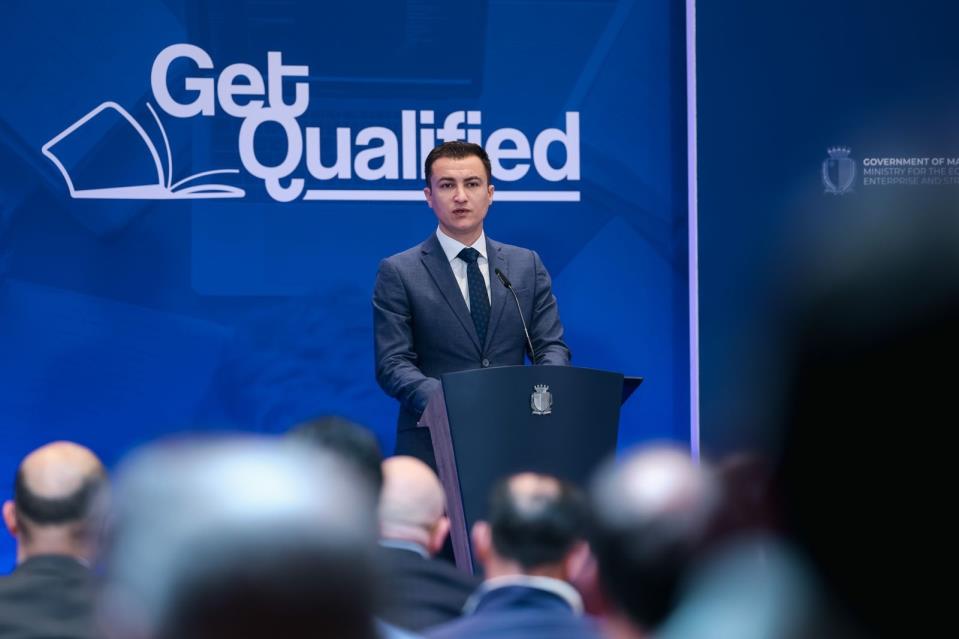
The government of Malta has made a significant move towards fostering scientific and technological advancement by launching an enhanced version of its Get Qualified scheme. This initiative underscores a deep commitment to supporting the growth of Science, Technology, Engineering, and Mathematics (STEM) fields within the nation.
This updated framework is not merely a procedural adjustment; it represents a strategic investment in human capital, aiming to equip the next generation with the skills necessary to compete in the modern global economy. The scheme’s extension until 2030 provides a long-term horizon for educational planning and skill development across various sectors.
Why Malta is Prioritizing STEM Education
The Strategic Importance of STEM in Modern Development
STEM disciplines form the bedrock of innovation, technological advancement, and sustainable development. By placing a heightened focus on these areas through the Get Qualified scheme, the Maltese government is positioning the nation to become a hub for knowledge-based industries. This strategic pivot acknowledges that future prosperity hinges on the capacity of its citizens to engage with and contribute to scientific problem-solving.
The enhanced scheme moves beyond traditional qualifications by integrating a stronger emphasis on practical application and critical thinking, essential traits for successful engineers, scientists, and technologists. This approach aims to bridge the gap between academic learning and real-world industry demands.
Deep Dive into the Revised Get Qualified Scheme
The recent revisions and enhancements to the Get Qualified scheme reflect a comprehensive review of educational methodologies. The launch of this revised scheme, with an increased focus specifically on STEM growth, signals a commitment to modernizing the entire educational ecosystem in Malta.
This revision ensures that the qualification process is aligned with contemporary learning standards. It involves restructuring how skills are assessed and recognized, ensuring that the qualifications obtained reflect a deeper understanding of complex STEM concepts rather than rote memorization.
Long-Term Vision: Extending the Horizon to 2030
The decision to extend the duration of the scheme until 2030 provides an invaluable long-term perspective. This extended timeline allows educational institutions, policymakers, and industry stakeholders to plan curricula and training programs with greater foresight. It enables a phased approach to skill development, ensuring that educational milestones are met progressively and effectively over the coming years.
This extended duration supports sustained investment in STEM education, recognizing that mastery in these fields requires continuous engagement and iterative learning throughout one's academic journey. It shifts the focus from short-term assessment to long-term competency building.
Implications for Malta's Future Economy
The successful implementation of this enhanced scheme will have profound implications for Malta's future economic landscape. By cultivating a highly skilled STEM workforce, the government is setting the stage for increased investment in research and development (R&D) and the establishment of high-tech industries within the island nation.
This focus on STEM education is directly correlated with enhancing Malta's competitiveness on the global stage. A society proficient in science and technology is better equipped to attract foreign direct investment and participate actively in international scientific collaborations. The enhanced scheme thus acts as a catalyst for economic diversification and sustainable growth.
In essence, Malta is leveraging this educational reform not just for academic success, but as a fundamental tool for achieving holistic national development and securing a prosperous future for all its residents.